How to Choose the Right Fence Height for Privacy
How to choose the right fence height for privacy in Denver: 4 ft in front of the facade, 6 ft behind it, sight triangles, and what to check before you build.
Denver fence heights: 4 ft in front of the facade, 6 ft behind it, sight triangles, and what to check before you build.
Denver’s height rules
Denver caps residential fences at 4 ft in front of the primary street-facing facade and 6 ft behind it. That split is the whole privacy question in one line: the tall fence belongs at the rear, and the front stays low and open. Corner lots add sight-triangle rules, and every fence must sit at least 6 inches back from the public sidewalk, never in the public right-of-way.
Taller fences are possible through the Denver Zoning Code over-height process (§10.5.5), with staff approval capped at 2 ft above the minimum required. Anything more needs a Board of Adjustment variance.
Privacy without breaking the rules
A 6-ft rear fence in cedar, vinyl, or composite is the standard Denver privacy answer, and board-on-board construction closes the gaps that shrink as boards dry. If a two-story neighbor overlooks your yard, the legal answer is still 6 ft behind the facade — plus planting, a pergola, or a seating arrangement that puts the private space where the fence actually screens it.
Do not assume a taller fence is a permit away: over-height approval is discretionary, and an HOA can require shorter than the city allows. Check both before ordering material.
Front yards stay low
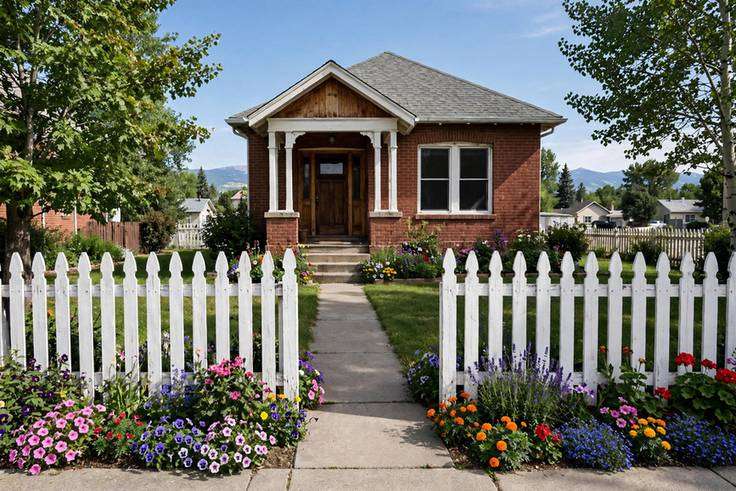
In front of the primary facade, 4 ft is the cap, and a low picket or iron fence suits the period streetscape of Denver’s older neighborhoods far better than a solid wall. In a historic district the rules tighten further: front fences are generally limited to 48 inches and more than 50% open, and vinyl, PVC, new chain link, and opaque front fencing are discouraged.
District boundaries are block-specific, so the question is always your address, not your neighborhood.