Payless Fence Company
Call (720) 697-2456

Wrought iron fence installation Denver CO for entries and period homes

Ornamental iron and steel, welded and finished for Colorado weather


Wrought iron fence installation Denver CO covers ornamental iron and steel fencing on one page, because the two materials serve the same jobs: a front entry, a courtyard, a pool surround, or a period home that needs ironwork to match. Iron is heavy, welded, and built to last decades — and it is the most expensive fence material in the Denver market guides, so the decision deserves an honest conversation first.

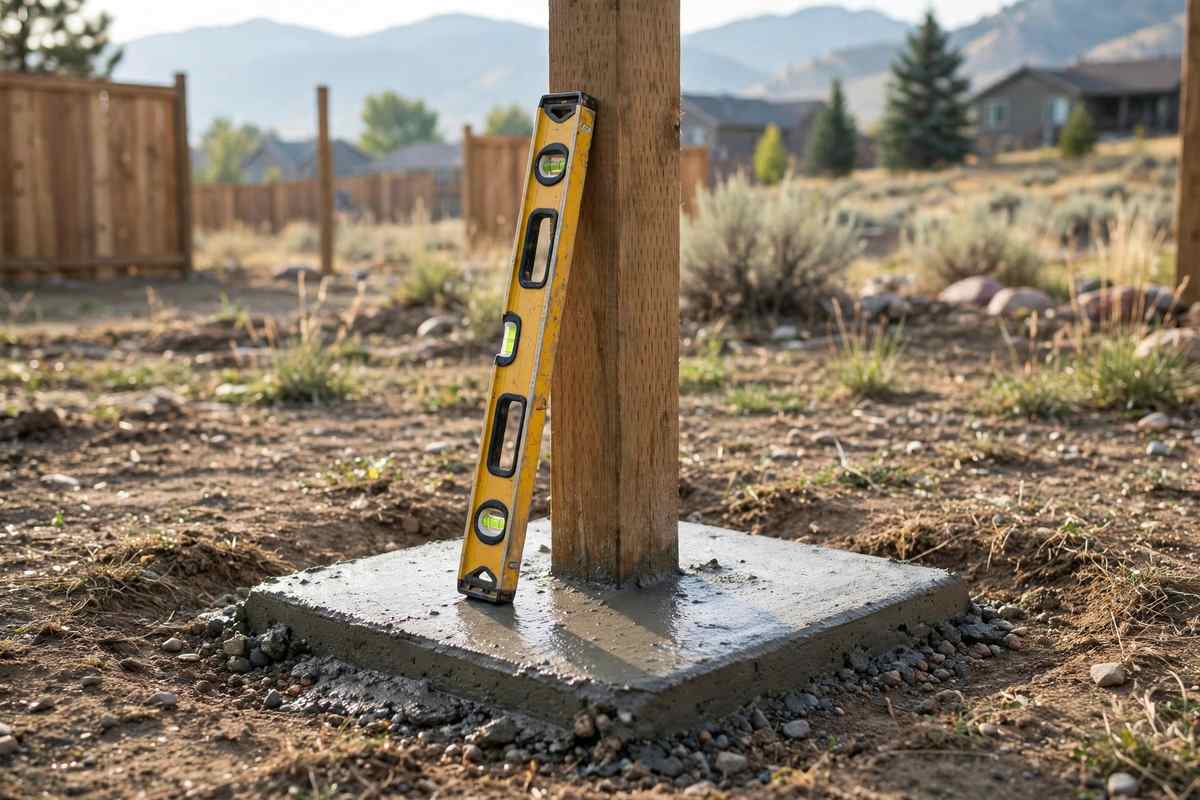
Fresh concrete footing around a new fence post, level tool against post, Denver
Denver Fence Contractor 17 Denver neighborhoods served
Open Daily Mon–Sun 7:00 AM–8:00 PM
Call to Book Call (720) 697-2456
Permit Guidance Zoning rules checked per job

What our wrought iron fence installation includes

Every iron fence we build comes with the same core scope: layout, post setting, panels, gates, and cleanup. Here is what is covered, and what we will flag before we start if your lot needs something different.

Layout and utility locate

We mark the fence line with stakes and a string line, confirm property boundaries, and contact Colorado 811 for utility locates before any digging starts. Iron panels are heavy and fixed in size, so the layout has to be exact.

Heavy posts set in concrete

Iron posts go deep in concrete — frost depth in the Denver metro is commonly cited at about 36 inches — because an iron panel is heavy and a heaved post shows immediately. Gate posts are set deeper still.

Welded panels and masonry piers

Panels are welded steel or iron, finished against rust, and set between posts or brick piers where the design calls for them. Masonry piers need their own footings, and we plan for that in the layout.

Gates with proper bracing

Iron gates get welded frames and heavy hinges. We hang the gate, test the swing, and adjust the latch before we leave. An iron gate that drags will pull its hinges out of the post.

Permit and Landmark guidance

We check the Denver rules for your address — 4 feet in front of the primary facade, 6 feet behind it, zoning permit over 4 feet — and the Landmark rules where they apply. In a historic district, a fence needs a permit and a Certificate of Appropriateness at any height.

Demo, haul-away, and cleanup

Everything old — iron fence, concrete footings, scrap — goes in the trailer. We rake the work area and sweep the driveway, then walk the line with you before we leave.

Wrought iron fence installation Denver CO: what the job actually involves


Wrought iron fence installation Denver CO is the process of setting heavy iron or steel posts in concrete and hanging welded ornamental panels between them. The panels are custom or semi-custom: pickets, scrollwork, finials, and spear tops are chosen to match the house, and the gates are welded to the opening. This is the slowest fence to build and the longest-lived — a well-kept iron fence outlasts the house's other fences by decades.

Most Denver homeowners choose iron for a front entry, a courtyard, or a period home in a historic district. The material suits Victorian, Queen Anne, Tudor, and Denver Square houses, and it is the reference material in districts such as Baker, Potter Highlands, and Curtis Park. The honest limits are cost — iron is the most expensive fence per foot in the market guides — and rust, which needs attention at every weld and scratch.
How our wrought iron fence installation process works

Every job follows the same four steps, whether it is a 40-foot front run in Baker or an estate perimeter in Montclair. You will know what happens each day.

01

Call

Call (720) 697-2456, Monday through Sunday, 7:00 AM to 8:00 PM. Tell us about the iron fence, the yard, and the lot, and we will set a time to measure.

02

Measure & plan

We measure the line, check the ground and the slope, note trees and roots, and confirm the height, permit, and Landmark rules for your address. Ironwork is made to the opening, so the measure has to be exact.

03

Build

Posts go in concrete and cure, panels are set plumb and welded or bolted to the posts, and gates are hung and tested. We keep the site tidy as we go.

04

Walk-through

The last step is a walk of the finished iron fence with you — every gate and latch checked, the site cleared before we leave.

Tools and methods we use on every wrought iron fence

Tools & Equipment

Post hole digger and auger

Used to bore clean holes deep enough to clear the frost line. Iron posts are heavy, so the concrete footing does the structural work.

String line and level

The string line keeps the fence straight over 100 feet, and the level keeps every post plumb. A crooked post shows immediately on a welded panel run.

Welder and grinder

Panels and gates are welded where the design calls for it, and every weld is ground smooth and primed before the finish goes on.

Tamper and wheelbarrow

Soil tamped around each footing keeps the iron fence post from shifting, and the wheelbarrow moves concrete mix to the hole.

Level and square for gates

Iron gates are built square and hung on reinforced posts. We check the diagonal before the gate goes on the hinges, not after.

Rust-inhibiting primer and finish

Every weld and cut is primed against rust before the finish coat goes on. A weld left bare rusts from the inside out.

Methods & Standards

Posts set below Denver frost depth

Denver metro frost depth is commonly cited at about 36 inches, and the exact code figure for fence posts is not settled in the sources we reviewed. Our rule: 36 inches is the floor, never the target, and iron fence posts are set in concrete.

Welds primed, not left bare

Every weld is ground smooth, primed, and finished. A bare weld is where an iron fence starts to rust, and rust at a weld is structural, not cosmetic.

Panels matched to the house

Ironwork is chosen to match the house: scrollwork and spear tops for a Victorian, simple pickets for a Denver Square, plain steel for a modern build. The fence should look like it belongs to the house.

Masonry piers on their own footings

Brick or stone piers need footings of their own, separate from the panel posts. We plan the piers into the layout and the permit, not as an afterthought.

When Denver homeowners call us for a wrought iron fence

01

A Victorian front yard needs a fence that matches the house

What we do:We measure the front run, talk through ornamental iron with brick piers, and check the Landmark rules for the address. In a historic district, the design needs a Certificate of Appropriateness before the zoning permit.

→ A front fence that looks like it has always belonged to the house — and passes design review.

02

An old iron fence has rusted through at the welds

What we do:We check whether the panels can be repaired — a failed weld can often be re-welded and refinished — or whether replacement is the better call. Our fence-repair page covers the repair-or-replace decision.

→ Ironwork saved where it can be saved, replaced where it cannot, with the same style carried through.

03

A courtyard or entry needs a security line that still looks good

What we do:We measure the entry, talk through a welded iron gate with a lockable latch, and set the posts deeper than the line posts. Iron is the security fence that does not look like a security fence.

→ A gate that locks, swings clean, and suits the front of the house.

04

A pool needs a fence that will not rust

What we do:We measure the pool surround, talk through iron or steel with self-closing, self-latching gates, and check the current Denver pool-barrier rule for the address before building. Our pool-fence page covers the code picture in detail.

→ A pool surround that keeps the water visible, the gate shut, and the rust in check.

How wrought iron fence installation runs in Denver

Iron is Denver's oldest fence material and its longest-lived. The Victorians of Baker, Curtis Park, and Potter Highlands were built with iron, and much of that ironwork is still standing. Denver's climate is mixed for iron: the dry air helps, but sprinkler spray, clay soil at the ground line, and hail all attack the finish, and a weld left bare rusts from the inside. The job is really about the finish — every weld primed, every scratch touched up — and the posts, which have to carry real weight in freeze-thaw ground.

Neighborhoods We Serve

  • Baker

    Victorian and Queen Anne homes from the 1870s to 1890s on narrow lots. Part of Baker is a Denver landmark district, where a fence needs a permit at any height and front fences must stay low and mostly open — check per address. On these streets, an ornamental iron fence is the usual call.

  • Capitol Hill

    Denver's densest neighborhood, mostly apartments and converted mansions. The fence work here is usually courtyard, parking-area, and rear enclosures rather than a suburban backyard run. An ornamental iron fence is the usual call on these streets.

  • Highland

    Settled on high ground west of the South Platte and annexed by Denver in 1896 (some histories say 1890). The Potter Highlands Historic District covers about 276 acres and 571 contributing buildings — check per address before planning a fence. These streets usually call for an ornamental iron fence.

  • Montclair

    Platted in 1885 with lots twice the standard Denver size. The Montclair Historic District, designated in 1975, covers only the central heart — Landmark review applies inside it, and period iron and masonry suit the front streetscape. On these streets, an ornamental iron fence is the usual call.

  • Five Points

    One of Denver's oldest neighborhoods, with the Curtis Park Historic District inside it and the Five Points Historic Cultural District designated in 2002. Victorian fronts call for low iron or picket; solid privacy belongs at the rear. An ornamental iron fence is the usual call on these streets.

Local Conditions We Plan For

  • Historic-district review is block-specific

    In a Denver landmark district, a fence needs a permit and a Certificate of Appropriateness at any height, and front fences must stay low and mostly open. District boundaries are block-specific — never assume a whole neighborhood is or is not in one. For a iron fence, we check the district boundary for your address before we quote.

  • Freeze-thaw cycles that heave shallow posts

    Denver's freeze-thaw ground lifts shallow posts within a winter or two. Frost depth is commonly cited at about 36 inches in the metro, and posts set shallower than that are the usual cause of a leaning fence. On a iron fence job, posts go deep in concrete so the freeze–thaw ground cannot lift them.

  • Bentonite clay that holds water against posts

    Expansive bentonite clay swells when wet and shrinks when dry, and it drains slowly, so post bases stay wet. Pressure-treated posts and a rot board at the base keep pickets out of the wettest soil. A iron fence in clay needs pressure-treated posts and a rot board at the base.

  • Hail Alley — the 8 May 2017 storm cost $2.3 billion insured

    Denver sits in Hail Alley, with 7 to 9 hail days a year. The 8 May 2017 storm caused $2.3 billion in insured losses across the metro. Vinyl is the most hail-vulnerable fence material; wood and metal fare better. For a iron fence, that means choosing a material that survives hail — vinyl is the most vulnerable.

What a typical wrought iron fence job looks like in Denver

Typical situation

A Victorian front yard has no fence, and the homeowner wants ironwork that matches the house. The lot is in a landmark district, so the design has to pass review.

How it is handled

We measure the front run, draw the panel design, and file for a Certificate of Appropriateness before the zoning permit. Once approved, posts go in deep in concrete and welded panels go up between brick piers, at or under the 4-foot front limit.

Upkeep:Check every weld and scratch each spring and touch up the finish before rust starts. Keep sprinklers from spraying the base of the fence daily.

Typical situation

An iron fence has rusted through at several welds, and the gate drags. The homeowner assumes the whole fence is done.

How it is handled

We check each panel. The failed welds are re-welded, ground smooth, primed, and refinished; the gate post is reset in fresh concrete and the gate is rehung. Only the panels that cannot be saved are replaced, in the same style.

Upkeep:Inspect the welds once a year and keep the finish intact. A small rust spot is a ten-minute touch-up; a rusted-through weld is a panel.

Typical situation

A courtyard behind a rowhouse needs a security gate that still looks like part of the house.

How it is handled

A welded iron gate goes in on deep-set posts with a lockable latch, sized to the opening and finished to match the existing ironwork. The courtyard fence is kept low and open so it does not darken the yard.

Upkeep:Oil the hinges and latch once a year. Check the gate posts each spring for lean — a heavy gate on a shallow post is the most common iron failure.

Wrought iron fence problems we fix for Denver homeowners

Most iron calls start with a problem, not a wish list. Here are the four we hear most often, and how we handle each one.

Problem

Rust at the welds

Iron rusts first at the welds and at scratches, and rust at a weld is structural — it eats the joint that holds the panel together.

Our Fix

We grind the rust out, re-weld where the joint has failed, prime, and refinish. A weld left bare will rust again within a season, so the finish is part of the repair.

Problem

A leaning run after a freeze-thaw winter

A heaved post shows immediately on a welded panel run — the panels rack and the rails pull out of the post pockets.

Our Fix

We dig out the failed footing, reset the post deep in fresh concrete, and rehang the panels. If the panel is undamaged, you keep it.

Problem

A heavy gate that drags or will not latch

An iron gate is heavy, and a shallow gate post leans under the load. The latch stops meeting the post, and forcing the gate pulls the hinges out.

Our Fix

We diagnose the cause first — post, hinges, or frame — reset the post if it has leaned, and rehang the gate with proper hardware, then test the swing.

Problem

A fence that does not meet historic-district rules

In a Denver landmark district, a fence needs a permit and a Certificate of Appropriateness at any height, and the design has to match the district's character.

Our Fix

We review the district rules for the address, measure the fence, and work out whether a design change or a new Certificate of Appropriateness brings it into compliance.

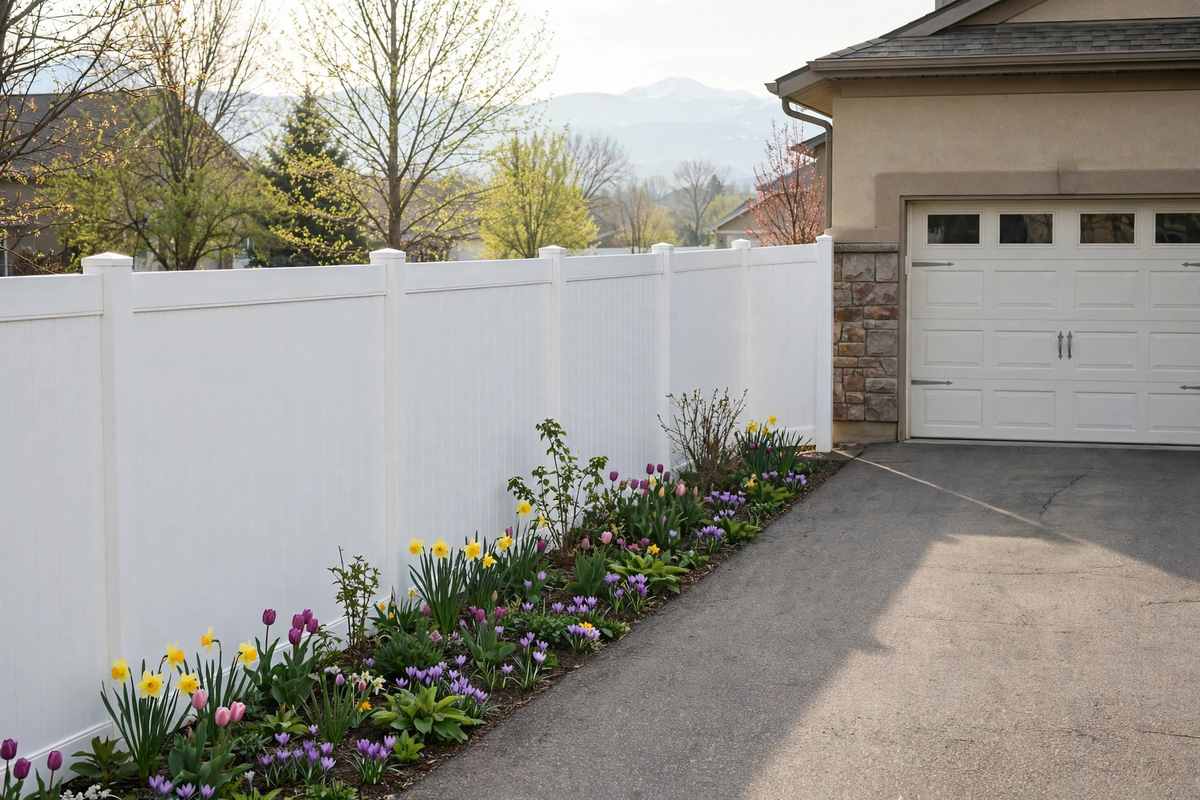
White vinyl privacy fence along a Denver driveway with garage, spring

Why Denver homeowners choose wrought iron fencing

Iron is the longest-lived fence material in Denver and the most expensive. Here is what you actually get when we build yours — and what it will ask of you afterward.

  • Built to last decades

    A well-kept iron fence outlasts every other fence on the block. The Victorians of Baker and Curtis Park still carry ironwork from the 1890s, and the material has not changed since.

  • The period reference

    In Denver's historic districts, iron is the reference material. A Victorian, a Denver Square, or a Tudor with ironwork looks right; the same house with vinyl in front does not.

  • Security that looks like a fence

    Iron is a security line that reads as a garden fence. A welded gate with a lockable latch keeps a courtyard shut without turning the front yard into a compound.

  • What wrought iron fencing costs in the Denver market

    Third-party market guides published in October and November 2026 put wrought and ornamental iron fencing at $65 to $150 or more per linear foot installed. Angi (4 Aug 2026) lists a typical iron fence project total of $3,200 to $5,740. Sources: Denver Fence Contractors; Recommended.app, Nov 2026 access; Angi, 4 Aug 2026. Those are market ranges, not Payless Fence Company prices. Call (720) 697-2456 with your fence length and material and we will talk through a quote for your yard.

Denver fence rules to know before you build

Denver Fence Rules to Know

  • 4 feet in front, 6 feet behind — iron suits the front — Denver caps a fence at 4 feet in front of the primary street-facing facade and 6 feet behind it. In a landmark district, a fence needs a permit and a Certificate of Appropriateness at any height, and front fences must stay low and mostly open.
  • Zoning permit over 4 feet — Denver requires a zoning permit for any fence over 4 feet tall — and in a landmark district, at any height. Over-height requests go through the Zoning Code's over-height process.
  • Colorado 811 before digging — We contact Colorado 811 for utility locates before any post hole is dug; never dig blind in a Denver yard — iron posts go deep.
  • HOA first, city second — In HOA neighborhoods, the association approves the fence before the city permit is filed; neither approval substitutes for the other — and landmark review can add a third step.

Rated on Google

Google ★★★★★4.9 out of 5

Rated 4.9 out of 5 from 27 Google reviews. Read the reviews on our Google Business Profile, or call (720) 697-2456 to talk about your fence.

Local experience with wrought iron fences in Denver

Iron in Denver has to survive freeze-thaw ground, sprinkler spray, and hail — and pass Landmark review where it applies. We build it for those conditions: deep concrete footings, every weld primed and finished, and panel designs matched to the house and the district. If your lot is in a historic district, we check the rules for the address before the build.

  • Posts set deep for Denver's bentonite clay and freeze-thaw ground
  • Every weld ground smooth, primed, and finished
  • Panel designs matched to the house and the district
  • Landmark and HOA checks before the build
  • Old fence, footings, and scrap hauled away
Call (720) 697-2456
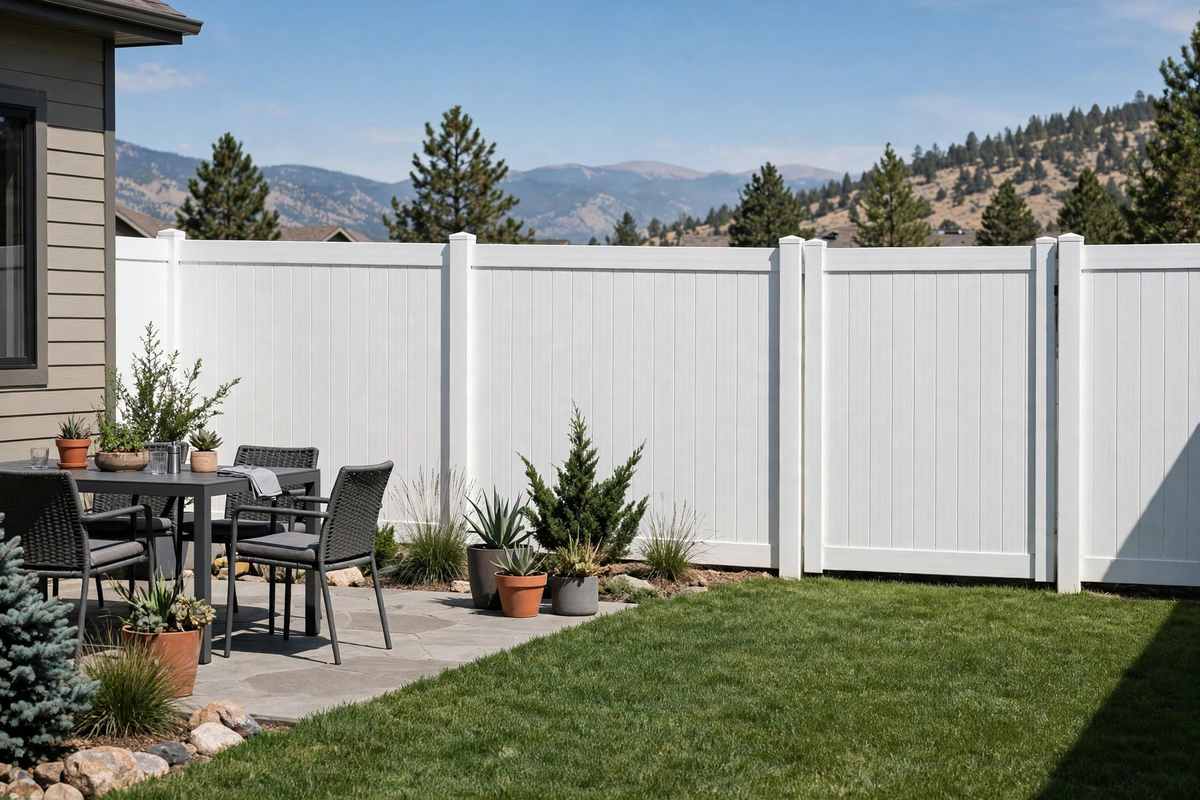
White vinyl privacy fence in a Denver backyard with lawn and patio furniture

Rated 4.9 out of 5 on Google

Payless Fence Company is rated 4.9 out of 5 from 27 Google reviews. Individual review text stays on Google; the aggregate is what we publish here. Call (720) 697-2456 to talk about your iron fence.

★★★★★

4.9 out of 5

Based on 27 Google reviews for Payless Fence Company. We do not publish customer quotes on this page; read the reviews on Google, then call us to talk about your fence.

Call (720) 697-2456

Frequently asked questions about wrought iron fence installation in Denver

Real answers to the questions we hear most often about iron fence from local homeowners and property managers.

How much does wrought iron fence installation cost in Denver?
Third-party market guides published in October and November 2026 put wrought and ornamental iron fencing at $65 to $150 or more per linear foot installed. Angi (4 Aug 2026) lists a typical iron fence project total of $3,200 to $5,740. Sources: Denver Fence Contractors; Recommended.app, Nov 2026 access; Angi, 4 Aug 2026. Those are market ranges, not Payless Fence Company prices. Call (720) 697-2456 with your fence length and material and we will talk through a quote for your yard.
Is wrought iron or steel better for a Denver fence?
They serve the same jobs on this page: ornamental iron is the traditional material, and modern steel is the common substitute — lighter, often less expensive, and finished the same way. The choice is about the look, the budget, and the district rules for your address, not about one being categorically better. Call (720) 697-2456 and we will talk through which suits your house.
How long does wrought iron fence installation take in Denver?
Two to four days on site is the usual span for a standard backyard run of 100 to 150 feet, once the permit and utility locate are in hand. The permit and locate add time before the build starts, and larger perimeters, gates, and sloped or rocky yards add more. Iron panels go up fast once the posts and piers are set — the masonry sets the pace. Call (720) 697-2456 and we will talk through timing for your lot.
Do I need a permit for a wrought iron fence in Denver?
A zoning permit is required in Denver for any fence over 4 feet tall, and a permit at any height on a landmark property, in a historic district, or along a designated parkway. Generally, a fence 4 feet and under needs no permit, and a like-for-like replacement of a permitted fence is exempt when nothing changes in location, footprint, or height. In a landmark district, iron needs a permit and a Certificate of Appropriateness at any height. Historic-district and parkway rules are block-specific, so check your address before you build — and call (720) 697-2456 and we can walk through what your lot needs.

Call Payless Fence Company about a wrought iron fence in Denver

Call Payless Fence Company at (720) 697-2456 to talk about a wrought iron or steel fence for your home. We will go over the design, the lot, and the Landmark and permit picture for your address, and set a time to measure.

Call Now Call (720) 697-2456

Talk to our fence crew

Call (720) 697-2456 to talk about a wrought iron fence. We answer Monday through Sunday, 7:00 AM to 8:00 PM. Have your approximate fence length, the style you are considering, and your neighborhood ready, and we can talk through the next steps on the call.

Payless Fence Company


  • Address

    Payless Fence Company LLC, Denver, CO 80201, US

  • Hours

    Mon–Sun 7:00 AM–8:00 PM

Call (720) 697-2456 Call Now
Call Call