Payless Fence Company
Call (720) 697-2456

Commercial fencing Denver CO for perimeters and security

Perimeter, security, and HOA fencing for businesses and properties


Commercial fencing Denver CO covers the fences that are not a backyard: a warehouse perimeter, a security line, a dumpster enclosure, an HOA common area, or a pool surround for a multifamily property. The buyers are different — a property manager, a business owner, an HOA board — and so are the questions: height, security spec, gate count, and who approves the work. We build commercial fences to the spec the property needs, not the catalog.

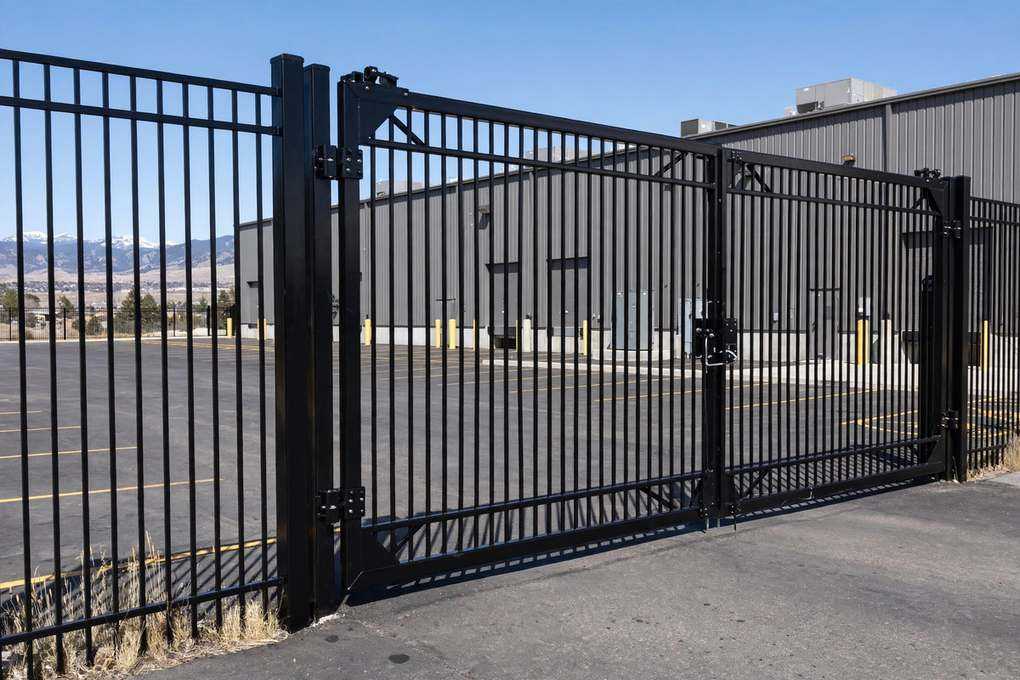
Tall black steel commercial perimeter security fence, Denver warehouse lot
Denver Fence Contractor 17 Denver neighborhoods served
Open Daily Mon–Sun 7:00 AM–8:00 PM
Call to Book Call (720) 697-2456
Permit Guidance Zoning rules checked per job

What our commercial fencing includes

Every commercial fence we build comes with the same core scope: survey, post setting, the fence itself, gates, and cleanup. Here is what is covered, and what we will flag before we start if your property needs something different.

Site survey and layout

We walk the property, measure the perimeter, note the access points, the slopes, and the utilities, and confirm the property lines. A commercial perimeter is usually long, and the layout has to be right before any post goes in.

Posts set in concrete

Commercial posts go deep in concrete — frost depth in the Denver metro is commonly cited at about 36 inches — because a long perimeter on shallow posts leans in freeze-thaw ground, and a security fence that leans is not a security fence.

Security and perimeter panels

Chain link, steel, aluminum, or iron, chosen for the security spec the property needs. A warehouse perimeter and an HOA courtyard are different fences, and we build each to its own spec.

Gates and access control

Walk gates, double drive gates, and slide gates for vehicle access, with the hardware the property needs. An automatic opener is a separate scope — our automatic-gate-opener page covers it.

Permit and approval guidance

We check the Denver rules for the address — industrial heights run 7 feet within the setback and 10 feet outside it, and any fence over 4 feet needs a zoning permit — and help with the approvals the property needs, whether that is a city permit, an HOA board, or a property manager.

Cleanup and walk-through

Old fence, footings, and scrap all go in the trailer. We clear the site, and walk the perimeter with you before we leave.

Commercial fencing Denver CO: what the job actually involves


Commercial fencing Denver CO is the process of building a perimeter, a security line, or a common-area fence for a business or a property — not a backyard. The work is in the spec: the height, the material, the gate count, and the access picture are decided by the property's needs, not by a catalog. A warehouse perimeter needs height and a vehicle gate; an HOA courtyard needs a fence that suits the residents; a dumpster enclosure needs a gate that a truck can open.

Most Denver commercial fences are bought by a property manager, a business owner, or an HOA board, and the decision-maker is rarely the person who lives next to the fence. That changes the job: the paperwork comes first — the city permit, the HOA approval, the board vote — and the build follows. The research found only one commercial-only fence firm in Denver, and most firms list commercial as a single line. We treat it as its own scope.
How our commercial fencing process works

Every job follows the same four steps, whether it is a warehouse perimeter or an HOA courtyard. You will know what happens each day.

01

Call

Call (720) 697-2456, Monday through Sunday, 7:00 AM to 8:00 PM. Tell us about the commercial fence, the yard, and the lot, and we will set a time to measure.

02

Survey & spec

We walk the property, measure the perimeter, and talk through the height, the material, the gates, and the approvals the property needs — city permit, HOA board, or property manager.

03

Build

Posts go in concrete and cure, panels go up plumb and straight, and gates are hung and tested. We keep the site tidy and the property's operations running as we go.

04

Walk-through

The last step is a walk of the finished commercial fence with you — every gate and latch checked, the site cleared before we leave.

Tools and methods we use on every commercial fence

Tools & Equipment

Post hole digger and auger

Used to bore clean holes deep enough to clear the frost line. A long commercial perimeter on shallow posts leans in freeze-thaw ground.

String line and level

The string line keeps a long perimeter straight over hundreds of feet, and the level keeps every post plumb. A commercial fence is a property line — a crooked run shows.

Wire tensioner and come-along

The tensioner pulls chain link fabric tight between terminal posts so a long security run does not sag.

Welder and grinder

Steel panels and gates are welded where the spec calls for it, and every weld is ground smooth and primed before the finish goes on.

Tamper and wheelbarrow

Soil tamped around each footing keeps the commercial fence post from shifting, and the wheelbarrow moves concrete mix to the hole.

Level and square for gates

Commercial gates are built square and hung on reinforced posts. We check the diagonal before the gate goes on the hinges, not after.

Methods & Standards

Posts set below Denver frost depth

Denver metro frost depth is commonly cited at about 36 inches, and the exact code figure for fence posts is not settled in the sources we reviewed. Our rule: 36 inches is the floor, never the target, and commercial fence posts are set in concrete.

Built to the property's spec

A warehouse perimeter, an HOA courtyard, and a dumpster enclosure are different fences. We build each to the height, material, and gate count the property needs, not to a catalog default.

Industrial heights where they apply

Denver allows taller fences in industrial districts — 7 feet within the setback and 10 feet outside it — and taller heights are possible through the Zoning Code's over-height process. We check the zoning for the address before quoting a height.

Access planned before the build

Vehicle gates, pedestrian gates, and service access are planned into the layout before any post goes in. A perimeter that blocks the property's own trucks is a failed fence.

When Denver property owners call us for commercial fencing

01

A warehouse needs a perimeter and a vehicle gate

What we do:We walk the property, measure the perimeter, talk through the height and the security spec, and build the fence with a slide or double gate for vehicle access. The industrial height rules for the address are checked before quoting.

→ A perimeter that secures the lot and still lets the property's trucks in and out.

02

An HOA needs common-area fencing replaced

What we do:We walk the common areas with the board or the manager, talk through the material and color the association's rules allow, and build the approved spec. The HOA approval comes before the city permit, and we plan for that order.

→ Common-area fencing that passes the board, the city, and the residents.

03

A multifamily property needs a pool surround and a dog run

What we do:We measure the pool and the dog run, talk through self-closing, self-latching pool gates and a dog run the residents can use, and build both. The pool-barrier rule is checked for the address before the build.

→ Amenities the residents can use, with gates that close themselves.

04

A dumpster enclosure needs rebuilding

What we do:We measure the enclosure, talk through a fence that hides the bins and still lets the truck in, and build it with a gate the hauler can open. The enclosure is sized to the bins, not the catalog.

→ Bins out of sight, and a gate the truck can actually use.

How commercial fencing runs in Denver

Denver's commercial fence market is thin: the research found only one commercial-only firm in the city, and most firms list commercial as a single line. The work is real — warehouses, HOA common areas, multifamily pools and dog runs, dumpster enclosures — and the rules are different from residential work. Industrial districts allow taller fences, 7 feet within the setback and 10 feet outside it, and any fence over 4 feet needs a zoning permit. The buyer is usually a board or a manager, not a homeowner, and the paperwork comes first.

Neighborhoods We Serve

  • Five Points

    One of Denver's oldest neighborhoods, with the Curtis Park Historic District inside it and the Five Points Historic Cultural District designated in 2002. Victorian fronts call for low iron or picket; solid privacy belongs at the rear. On these streets, a commercial fence is the usual call.

  • Capitol Hill

    Denver's densest neighborhood, mostly apartments and converted mansions. The fence work here is usually courtyard, parking-area, and rear enclosures rather than a suburban backyard run. A commercial fence is the usual call on these streets.

  • Globeville

    A former smelter company town of small worker cottages, cut by I-25 and I-70. Many homes back onto freeway embankments or industry, and the western edge sits in South Platte River floodplain — verify per lot. These streets usually call for a commercial fence.

  • Cherry Creek

    Cherry Creek North is the residential pocket behind the shopping district: early-1900s Craftsman and bungalow streets with small lots of 5,000 to 10,000 square feet and heavy scrape-and-rebuild. On these streets, a commercial fence is the usual call.

  • Central Park

    Master-planned community on the former Stapleton airport, built mostly 2002 to 2019. The Master Community Association and sub-associations review fence designs before the city permit — two approvals, in that order. A commercial fence is the usual call on these streets.

Local Conditions We Plan For

  • Denver permit and sight-triangle rules

    Denver caps fences at 4 feet in front of the primary street-facing facade and 6 feet behind it, and any fence over 4 feet needs a zoning permit. Corner lots have sight-triangle limits near intersections, and fences sit at least 6 inches back from the public sidewalk. For a commercial fence, we check the height and the sight triangle for your address before we quote.

  • Chinook wind that loads solid fences

    Chinook gusts on the Front Range can top 80 mph on the I-25 corridor. A solid 6-foot privacy run catches the full wind load, which is why posts, footings, and rail fastening matter more than the pickets. On a commercial fence job, Chinook gusts are part of the footing plan, not an afterthought.

  • Freeze-thaw cycles that heave shallow posts

    Denver's freeze-thaw ground lifts shallow posts within a winter or two. Frost depth is commonly cited at about 36 inches in the metro, and posts set shallower than that are the usual cause of a leaning fence. A commercial fence only holds if the posts are set below the frost line in concrete.

  • Historic-district review is block-specific

    In a Denver landmark district, a fence needs a permit and a Certificate of Appropriateness at any height, and front fences must stay low and mostly open. District boundaries are block-specific — never assume a whole neighborhood is or is not in one. For a commercial fence, we check the district boundary for your address before we quote.

What a typical commercial fence job looks like in Denver

Typical situation

A warehouse lot has no perimeter fence, and the owner wants a security line with a vehicle gate. The lot is flat, with a straight boundary and one drive entrance.

How it is handled

A tall chain link perimeter goes in with privacy screening, on deep-set posts, with a slide gate for vehicle access. The industrial height rules for the address are checked before quoting, and the zoning permit is filed for the over-4-foot run.

Upkeep:Check the fabric ties and the gate track each spring. Keep the gate's path clear of pallets and bins so it slides freely.

Typical situation

An HOA's common-area fencing is failing, and the board needs it replaced to the association's spec. The residents use the courtyard every day, so the work has to be phased.

How it is handled

We read the HOA spec, confirm the material and color it allows, and build the approved fence in sections so the courtyard stays usable. The HOA approval comes before the city permit, and both are kept on file.

Upkeep:Keep the HOA approval letter with the permit paperwork. If a panel is damaged, replace it with the same color and profile the association approved.

Typical situation

A multifamily property needs a pool surround and a dog run, and the manager wants both done in one job.

How it is handled

An aluminum pool surround goes in with self-closing, self-latching gates, and a chain link dog run goes in beside it with a walk gate. The pool-barrier rule is checked for the address before the build, because the published figures conflict.

Upkeep:Test the pool gates every month — a gate that does not close on its own is not a pool fence. Walk the dog run once a month for dig-outs at the base.

Commercial fence problems we fix for Denver properties

Most commercial calls start with a problem, not a wish list. Here are the four we hear most often, and how we handle each one.

Problem

A leaning perimeter after a freeze-thaw winter

A long commercial perimeter on shallow posts leans in freeze-thaw ground, and a leaning security fence is not a security fence.

Our Fix

We dig out the failed footings, reset the posts deep in fresh concrete, and rehang the panels. If the panels are undamaged, you keep them.

Problem

A vehicle gate that will not slide or swing

A commercial gate takes daily truck traffic, and a gate that will not open blocks the property's own operations. The cause is almost always a leaning post or a track full of gravel.

Our Fix

We diagnose the cause first — post, track, or frame — reset the post if it has leaned, clear and repair the track, and test the gate under its working load.

Problem

A fence that does not meet the HOA or board spec

An HOA or a board that has a written fence spec will reject a fence built to the wrong material, color, or height — and a rejected fence is a fence that has to come down.

Our Fix

We read the spec before quoting, build the approved fence, and keep the approval on file. A fence built to the spec the first time is cheaper than a fence built twice.

Problem

A pool surround that does not meet the barrier rules

A multifamily pool surround has to meet the barrier rules, and a gate that does not close itself is not a pool fence — it is a liability.

Our Fix

We check the current pool-barrier rule for the address, fit self-closing, self-latching gates, and test them every month. The published height figures conflict, so we check the rule rather than assume it.

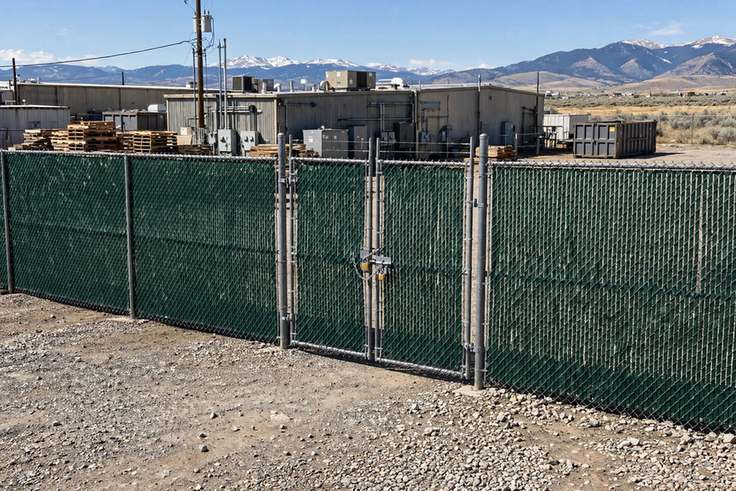
Tall chain-link commercial security fence with privacy screening, industrial Denver property

Why Denver properties choose our commercial fencing

Commercial fencing is a spec job, not a catalog job. Here is what you actually get when we build yours.

  • Built to the property's spec

    A warehouse perimeter, an HOA courtyard, and a dumpster enclosure are different fences. We build each to the height, material, and gate count the property needs.

  • Paperwork first, build second

    The city permit, the HOA approval, and the board vote come before the build, not after. A fence built without its approvals is a fence that has to come down.

  • Gates that work under load

    Commercial gates take daily truck traffic. They are built square, hung on deep-set posts, and tested under their working load before we leave.

  • What commercial fencing costs in Denver

    Commercial fencing is quoted per project — perimeter length, height, security spec, and gate count drive it — and no published Denver per-foot commercial range was found in the research. Call (720) 697-2456 with the property's perimeter and spec, and we will talk through a quote.

Denver fence rules to know before you build

Denver Fence Rules to Know

  • Industrial heights where they apply — Denver allows taller fences in industrial districts — 7 feet within the setback and 10 feet outside it — and any fence over 4 feet needs a zoning permit. Residential height caps do not apply to an industrial lot, and industrial caps do not apply to a house.
  • Zoning permit over 4 feet — Denver requires a zoning permit for any fence over 4 feet tall; over-height requests go through the Zoning Code's over-height process. Industrial heights have their own caps — see the first item above.
  • Colorado 811 before digging — We contact Colorado 811 for utility locates before any post hole is dug; never dig blind in a Denver yard — a commercial perimeter means a lot of holes.
  • HOA first, city second — In HOA neighborhoods, the association approves the fence before the city permit is filed; neither approval substitutes for the other — commercial sites usually answer to a property manager instead.

Rated on Google

Google ★★★★★4.9 out of 5

Rated 4.9 out of 5 from 27 Google reviews. Read the reviews on our Google Business Profile, or call (720) 697-2456 to talk about your fence.

Local experience with commercial fencing in Denver

Commercial fencing in Denver is a spec and paperwork job: long perimeters in bentonite clay, industrial height rules, HOA and board approvals, and gates that work under daily truck traffic. We build perimeters, security lines, and common-area fences to the spec the property needs — and we keep the property running while we build.

  • Posts set deep for Denver's bentonite clay and freeze-thaw ground
  • Built to the property's height, material, and gate spec
  • City permit, HOA, and board approvals handled in order
  • Gates tested under their working load
  • Old fence, footings, and scrap hauled away
Call (720) 697-2456
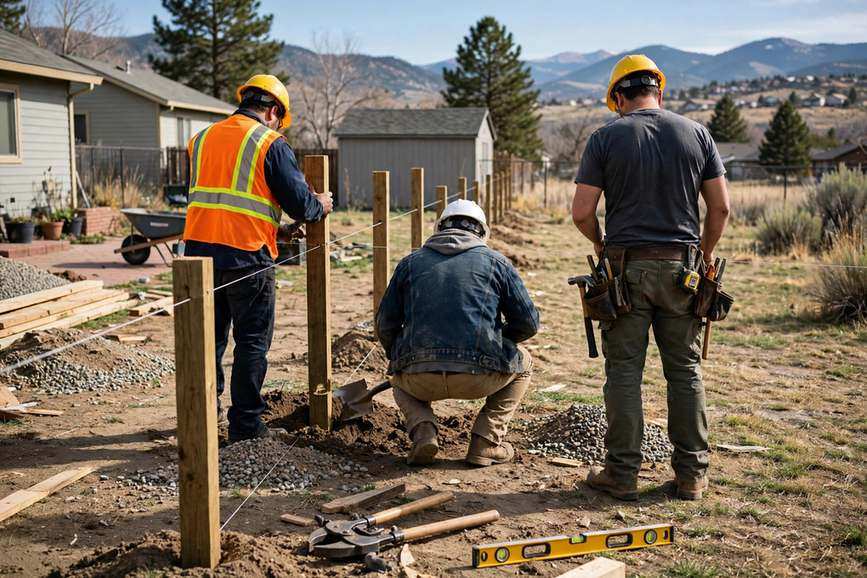
Fence crew setting posts along a string line, workers from behind

Rated 4.9 out of 5 on Google

Payless Fence Company is rated 4.9 out of 5 from 27 Google reviews. The aggregate covers our Denver fence work, commercial jobs included. Call (720) 697-2456 to talk about your commercial fence.

★★★★★

4.9 out of 5

Based on 27 Google reviews for Payless Fence Company. We do not publish customer quotes on this page; read the reviews on Google, then call us to talk about your fence.

Call (720) 697-2456

Frequently asked questions about commercial fencing in Denver

Real answers to the questions we hear most often about commercial fence from local homeowners and property managers.

How much does commercial fencing cost in Denver?
Commercial fencing is quoted per project — perimeter length, height, security spec, and gate count drive it — and no published Denver per-foot commercial range was found in the research. Call (720) 697-2456 with the property's perimeter and spec, and we will talk through a quote.
What fence works for a warehouse perimeter?
A tall chain link perimeter with privacy screening is the usual choice, with a slide or double gate for vehicle access. Denver allows taller fences in industrial districts — 7 feet within the setback and 10 feet outside it — and any fence over 4 feet needs a zoning permit. We check the zoning for the address before quoting a height.
How long does commercial fencing take?
A commercial perimeter is usually a longer job than a backyard fence: the perimeter is longer, the gates are bigger, and the approvals take time. The build itself depends on the length, the height, and the gate count. Call (720) 697-2456 with the property's perimeter and spec, and we will talk through timing.
Do I need a permit for a commercial fence in Denver?
Denver's rule is a zoning permit for any fence over 4 feet tall, and a permit at any height on a landmark property, in a historic district, or along a designated parkway. Generally, a fence 4 feet and under needs no permit, and a like-for-like replacement of a permitted fence is exempt when nothing changes in location, footprint, or height. Industrial lots have their own height caps — 7 feet within the setback and 10 feet outside it. Historic-district and parkway rules are block-specific, so check your address before you build — and call (720) 697-2456 and we can walk through what your lot needs.

Call Payless Fence Company about commercial fencing in Denver

Call Payless Fence Company at (720) 697-2456 to talk about commercial fencing for your property. Tell us the perimeter, the spec, and who approves the work, and we will talk through the next steps.

Call Now Call (720) 697-2456

Talk to our fence crew

Call (720) 697-2456 to talk about commercial fencing. We answer Monday through Sunday, 7:00 AM to 8:00 PM. Have the property's perimeter, the fence spec, and the approving board or manager ready, and we can talk through the next steps on the call.

Payless Fence Company


  • Address

    Payless Fence Company LLC, Denver, CO 80201, US

  • Hours

    Mon–Sun 7:00 AM–8:00 PM

Call (720) 697-2456 Call Now
Call Call