
How to Install a Fence Post in Rocky Denver Soil
How to install a fence post in Denver soil: frost depth, digging, concrete, and calling 811 before you dig.
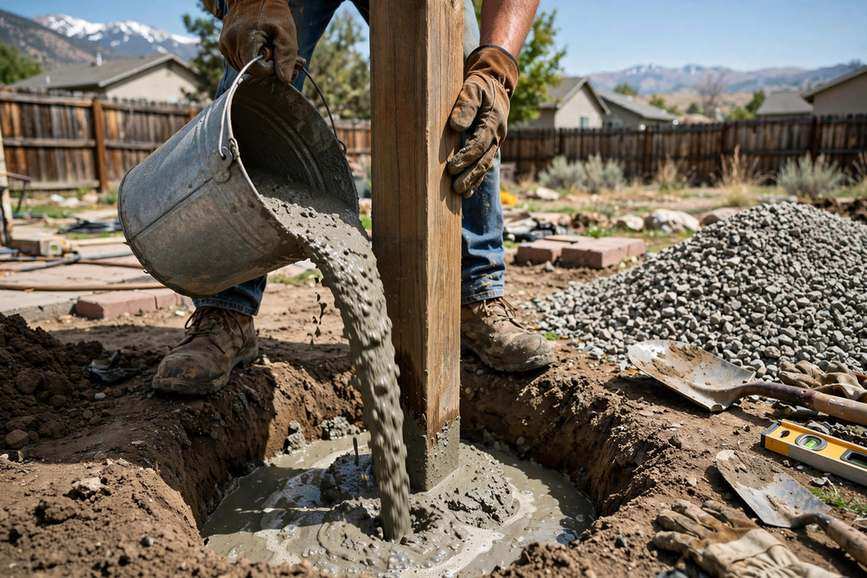
Setting fence posts in Denver's bentonite clay: frost depth, digging, concrete, and calling 811 before you dig.
Denver soil is the problem
Denver sits on expansive bentonite clay that swells when wet and shrinks when dry, and the metro frost depth runs about 36 inches. Treat 36 inches as the floor, never the target: a post set 24 inches deep in clay is the usual cause of a fence leaning after a couple of winters. Soil varies lot by lot, so never assume a neighbor’s ground is yours.
Add freeze–thaw, high-altitude UV, chinook wind, and hail, and the post is doing more work here than in most American cities. Getting the footing right is the whole job.
Digging and setting
Call Colorado 811 at least 48 hours before you dig — it is the law before post holes go in, and sprinkler lines are not the only thing buried along a fence line. Dig with an auger or post-hole digger, set the post plumb, and pour concrete around the base with drainage so water does not sit against the wood.
Brace the post until the concrete cures, and check it against a string line, not by eye. Backfill and tamp in layers. Do not trap water against the post: rot at the ground line is the most common post failure in Denver.
Rocky and sloped ground
Rock and grade changes are normal on Denver’s west side and in the foothills-edge neighborhoods. Stepped panels follow a slope in level runs; racked panels follow it in a smooth line. Either way, the posts still go deep — a slope does not excuse a shallow footing.
Where a fence sits above a retaining wall, remember the wall has its own rules: a zoning permit is required for retaining walls over 12 inches, and any modification to a retaining wall needs a permit, even like-for-like.