
How to Seal a Fence Before Winter in Denver
How to seal a fence before winter in Denver: cleaning, drying, timing, and what sealant does in dry, high-UV air. DIY guide.
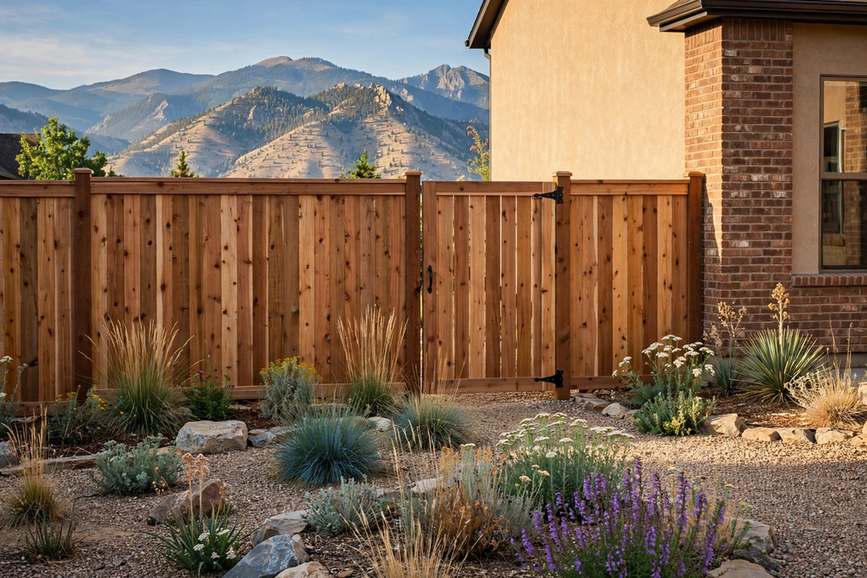
Sealing a wood fence before a Denver winter: cleaning, drying, timing, and what sealant does in dry, high-UV air. DIY guide.
Why Denver winters punish unsealed wood
Denver winters are dry, sunny, and hard on wood. Water gets into the end grain, freezes, expands about 9%, and splits the fibers — then the next thaw lets in more water. Add high-altitude UV and 25–40% humidity, and an unsealed cedar fence dries, cracks, and grays fast.
Sealant does not make a fence waterproof. It slows water getting in and lets the wood dry out between storms, which is what keeps boards from splitting over winter.
Prep and timing
Seal in fall, before the first freeze — around 7 October in Denver. Clean the fence first: wash off dirt and mildew, let it dry completely, and test by splashing water on it. If the water soaks in flat instead of beading, the old seal has worn off and it is time.
Pick mild, dry days. Sealant applied in freezing weather will not cure, and sealant applied in direct hot sun skins over before it soaks in. Work the shaded sides first and follow the shade around the yard.
What to use and how
Use a penetrating sealer that soaks into the wood rather than a film that sits on the surface and peels. Two thin coats beat one thick one, and the end grain — the tops of posts and pickets — needs the most attention, because that is where water gets in.
Reapply when water stops beading, usually every few years depending on exposure. And one honest note: Payless Fence Company does not offer staining or sealing as a service. This is a maintenance guide for homeowners, not a service page.