Why Is My Wood Fence Turning Gray in Denver?
Why is my wood fence turning gray in Denver? Cedar fences turn gray fast in Denver's high-altitude sun and dry air — why it happens and what maintenance can do.
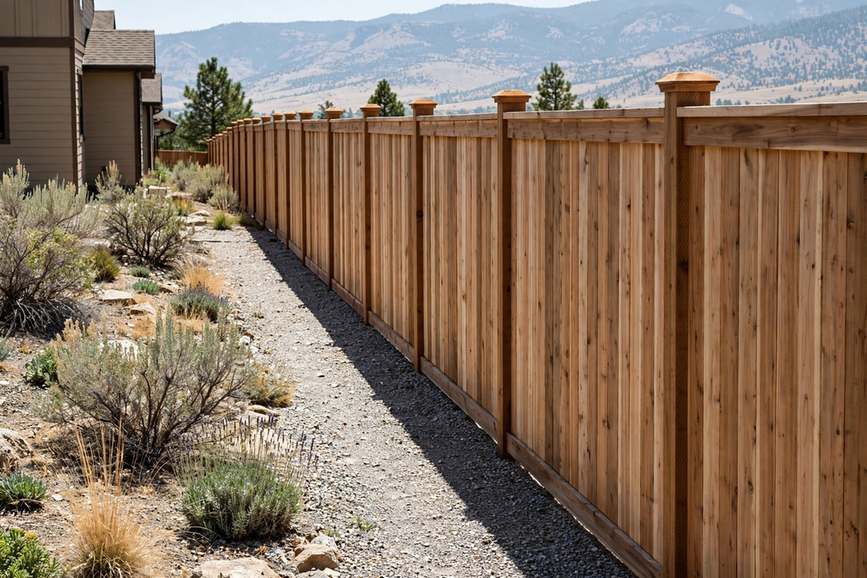
Cedar fences turn gray fast in Denver's high-altitude sun and dry air. Why it happens and what maintenance can do.
Sun and dry air
Denver gets 300+ sunny days a year and sits at 5,280 ft, where UV is stronger than at sea level. UV breaks down the lignin in cedar, and the surface turns silver-gray — fast, often within two seasons. Low humidity, 25–40%, dries the wood until the end grain splits.
Graying is worst on south- and west-facing runs, and on fences with no stain or sealant. It is not a sign of bad wood. It is a sign of Denver weather.
Gray is not rot
Graying is surface weathering. The structural question is the ground line: check the base of every post and the bottom of every picket. If the wood is soft or crumbling there, that is rot, and it matters. If the wood is sound and only gray, the fence is still doing its job.
A gray fence with sound posts is a maintenance job. A gray fence with rotted posts is a repair job. Tell the difference before spending money on either.
What maintenance can do
Cleaning and staining restore color on sound wood, and sealing slows the next round of graying. Our blog has step-by-step DIY guides for staining and sealing a fence in Denver’s dry climate — both are maintenance jobs homeowners can do themselves.
Boards rotted at the base should be replaced, not stained. And one honest note: Payless Fence Company does not offer staining or sealing as a service. This is a maintenance guide, not a service page.